Analogue LegendsTHE MOMENT BEFORE THE FILTERS TOOK OVER

The Last Mechanical Stand

Three supercars. Three philosophies. One question.

The 2000s were the hinge point. Analogue instinct had not disappeared, but software, automated shifting and electronic mediation were beginning to redefine what a supercar felt like. These three machines did not agree on the answer. That disagreement is the story.

3 machinesone question
The argument

Ferrari strips mass and sharpens response. Ford gives responsibility back to the driver. Lamborghini turns effort itself into theatre. None is the single 'correct' answer — but together they capture the last moment when the supercar still argued openly about how much the driver should feel.

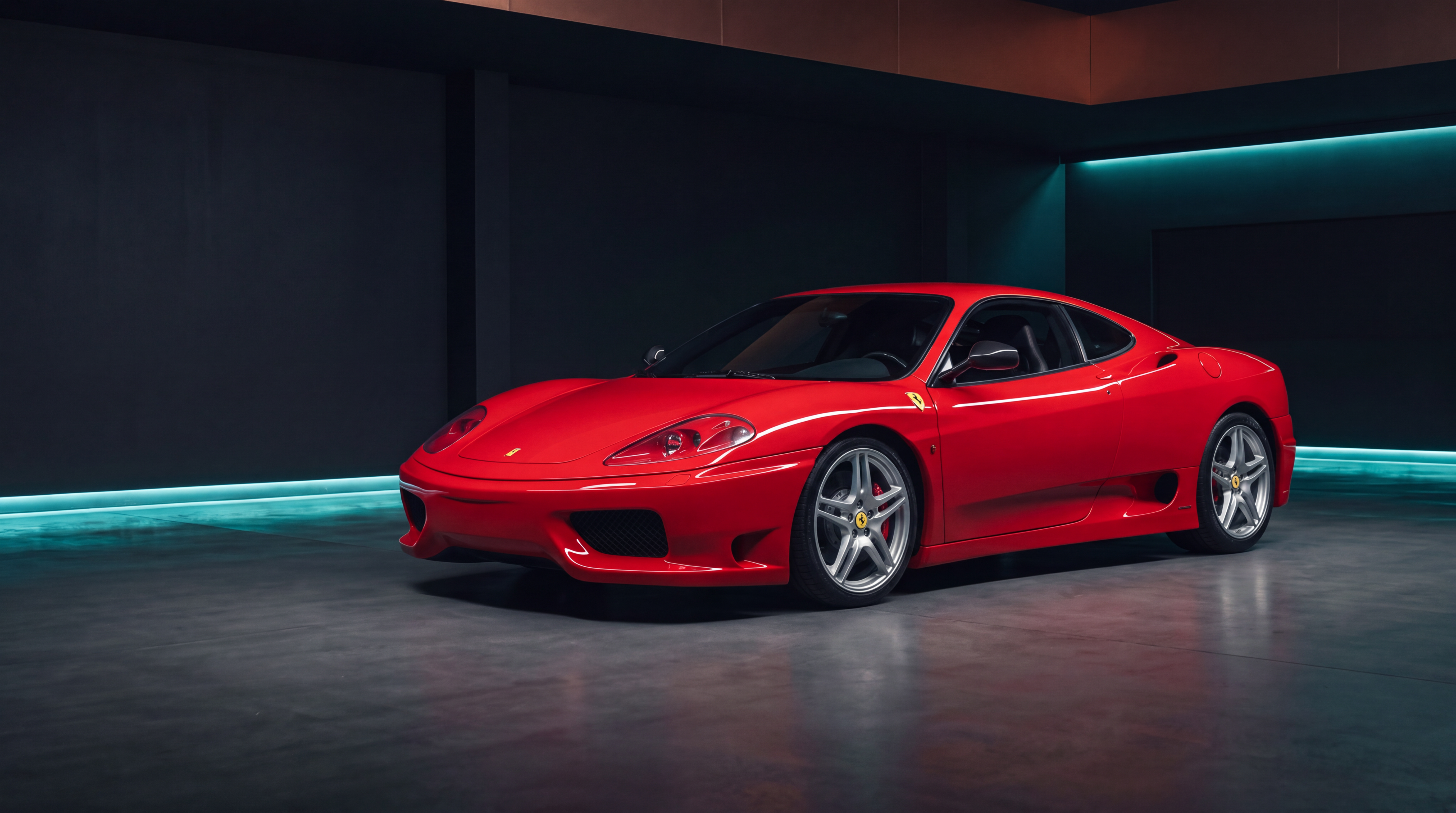
Ferrari 360 Challenge Stradale editorial reference
Chapter 01The Reductionist

Response, distilled

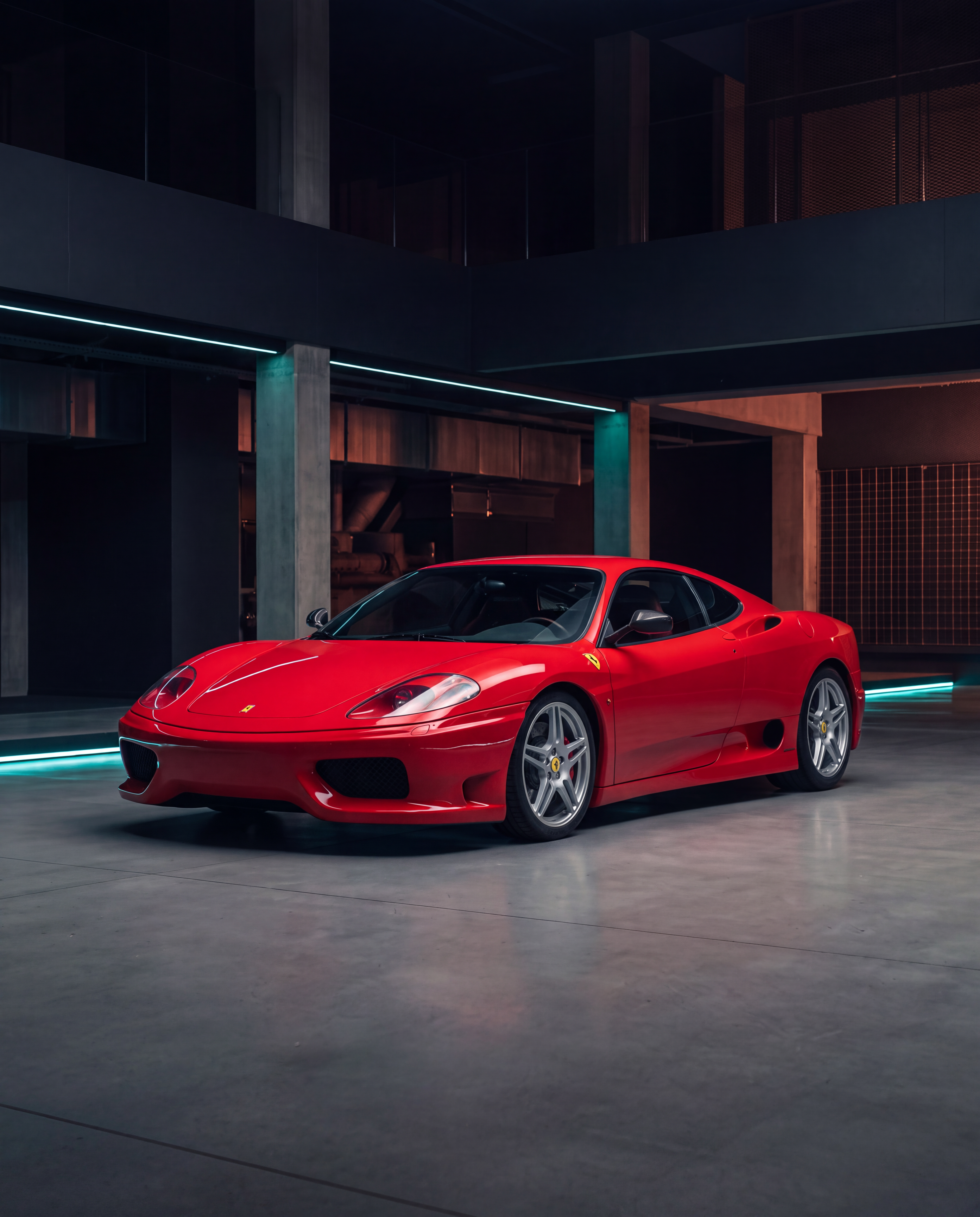
Ferrari 360 Challenge Stradale

Ferrari's answer was subtraction.

Less mass. Less insulation. Less delay.

The paradox

NO CLUTCH
PEDAL.

Still mechanical?

One of Ferrari's most focused road cars removed one of the classic rituals of involvement. The question is whether immediacy can matter more than nostalgia.

Did you know?
150MS

FAST SHIFT.
STILL YOUR DECISION.

Ferrari quoted a minimum 150 ms shift in the Challenge Stradale's fastest F1 setting — yet deliberately gave it no fully automatic shift mode. Every change still had to be requested by the driver.

Double-checked2 refs
Did you know?
110KG

REMOVED.
NOT JUST HIDDEN.

The famous 110 kg reduction was systemic: Ferrari's technical breakdown attributes 94 kg to the body, 11 kg to engine and gearbox changes, and 5 kg to unsprung mass.

Body94kg
Engine + gearbox11kg
Unsprung mass5kg
Double-checked2 refs
Ferrari 360 Challenge Stradale editorial reference
Ferrari's answer

RESPONSE,
DISTILLED.

The gearbox changed the ritual. The car kept the concentration.

That is why the Challenge Stradale belongs here: not because it preserved every old-school mechanism, but because reduction made every remaining input matter more.

Next chapter

FROM REDUCTION
TO RESTRAINT.

Ferrari sharpened the response. Ford hands responsibility back to the driver.

Continue to First generation
Chapter 02The RationalistClarity, by designModern performance, deliberately mechanical

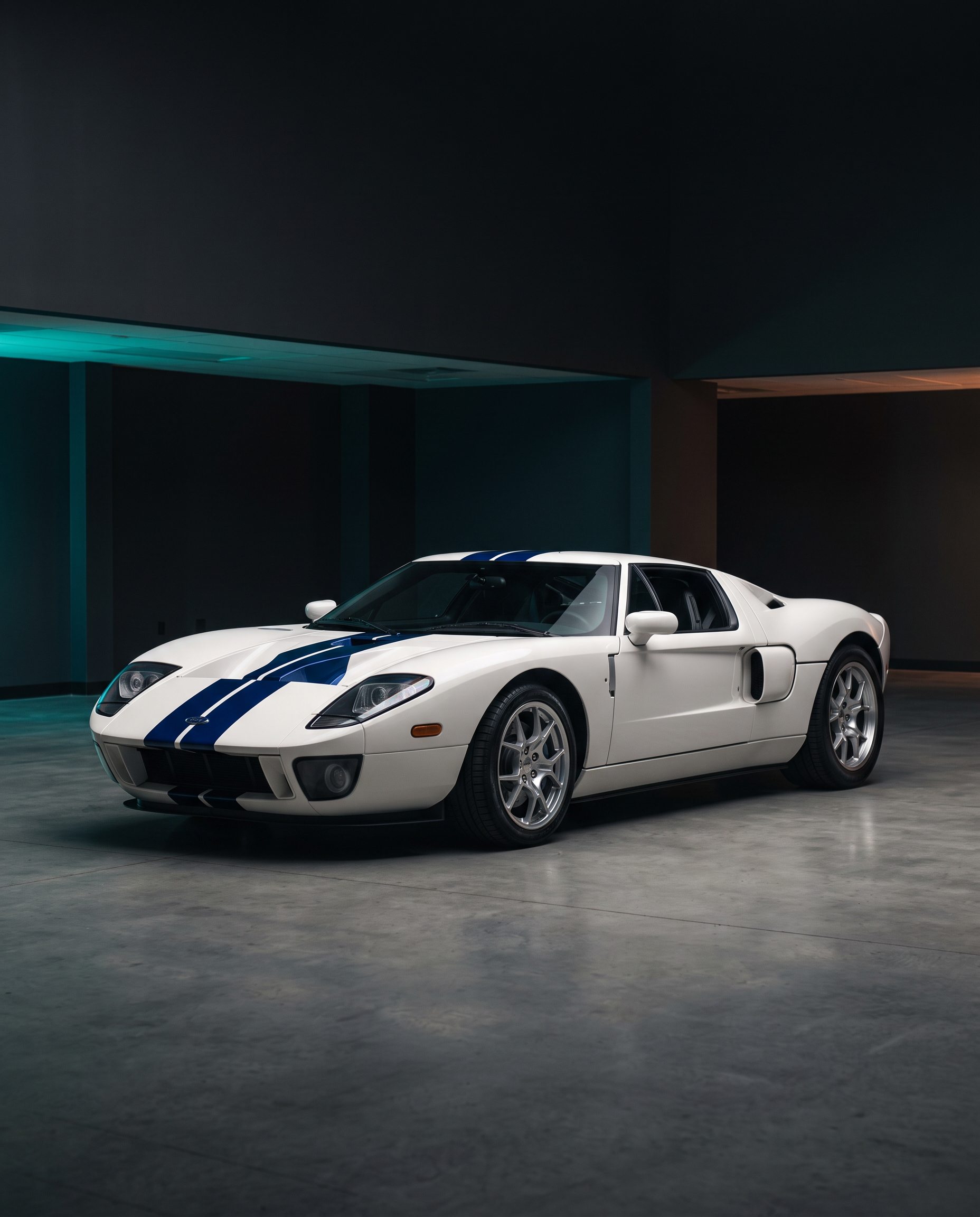
Ford GT

Ford's answer was restraint. Six manual ratios, rear drive and almost no electronic mediation between a decision and its consequence.

Six manual ratios, rear drive and little between the driver's decision and the car's response.

Ford GT editorial reference02 / 03
Did you know?
Centennial with new bones

The GT was created as part of Ford's 100th-anniversary celebration and visually recalled the GT40 — but its chassis and supercharged V8 were entirely new.

Only four boxes to tick

The original Ford GT famously had just four major factory options: racing stripes, forged BBS wheels, painted brake calipers and a McIntosh audio system.

The missing safety net

Period tests confirmed the Ford GT had no traction control and no stability control. ABS remained, but managing 550 hp at the rear tyres was still the driver's job.

Double-checked · source trail6 references

A modern supercar with remarkably few layers.

Ford paired a mid-mounted 550-hp supercharged V8 with a Ricardo six-speed manual, twin-disc clutch and limited-slip differential. Period testing recorded crisp throttle response. ABS remained, but stability control did not: the car assisted braking without mediating the complete dynamic decision.

Year2004
EngineV8 · Supercharged
Transmission6-speed manual
DriveRWD
LayoutMid
Power550 hp
Verified proof points
5.4-litre supercharged V8 · 550 hp
Ricardo six-speed manual · twin-disc clutch
ABS retained · no stability-control system
Era2000s
OriginUnited States · North America
DomainROAD_LEGAL
ClassSUPERCAR
LayoutMid · RWD
PowertrainPetrol · V8 · Supercharged
Primary source Independent authority
PrimaryVERIFIED

Ford's manufacturer brochure specifies a mid-mounted all-aluminium 5.4-litre DOHC supercharged V8 producing 550 horsepower.

Ford — 2005 GT sales brochure
PrimaryVERIFIED

Ford's brochure specifies a six-speed Ricardo transaxle with a twin-disc clutch and limited-slip differential.

Ford — 2005 GT sales brochure
IndependentVERIFIED

Car and Driver's period comparison states that the Ford GT had ABS but no stability-control system.

Car and Driver — Ford GT vs Challenge Stradale vs 911 GT3
IndependentVERIFIED

Car and Driver measured the Ford GT with crisp throttle response in its period comparison test.

Car and Driver — Ford GT vs Challenge Stradale vs 911 GT3
Editorial reference — not offered for sale
Next chapter · 03

And then the answer becomes theatre.

The Ford GT proved that deliberate engineering could feel relentlessly modern and mechanical. The final machine argues that theatre and occasion are their own path to the driver's centre.

Continue to 6.2 gated manual
Chapter 03The DramatistTheatre, by effortV12 theatre through a gated manual

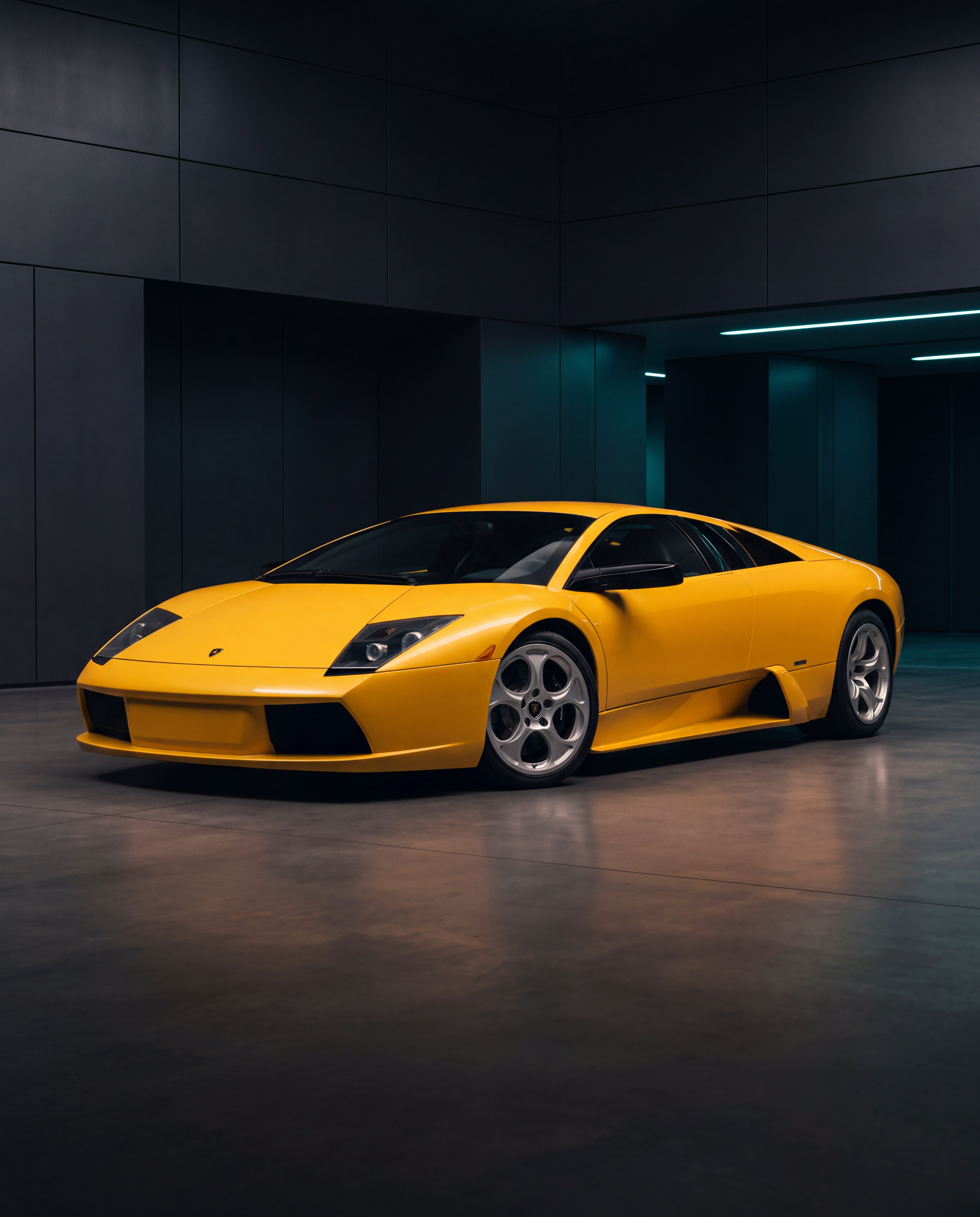
Lamborghini Murciélago 6.2

Lamborghini's answer was ritual. A V12, an open gate and heavy controls make every ordinary input feel like an event.

Heavy controls, an open gate and a naturally aspirated V12 turn every input into an event.

Lamborghini Murciélago 6.2 editorial reference03 / 03
Did you know?
Three records in one night

In February 2002 a Murciélago set three production-car world speed records at Nardò. In the one-hour run it covered just over 305 km — including a refuelling stop.

A Bat for Batman

Bruce Wayne drove a Murciélago in Batman Begins. The joke is almost too perfect: 'murciélago' literally means 'bat' in Spanish.

Rarer than memory suggests

Across all versions, Lamborghini built 4,099 Murciélagos before production ended — fewer than the model's cultural footprint would make you guess.

Double-checked · source trail6 references

Mechanical theatre at full scale.

Lamborghini introduced the Murciélago in 2001 with a naturally aspirated 6.2-litre V12 and standard four-wheel drive. The selected specification uses the six-speed manual and stainless-steel gate. Period testing found deliberate shift action, a weighty clutch and brakes that demand pressure. Its steering filters some texture and its chassis tends toward understeer, so its case is physical theatre and demanded commitment—not purity by mythology.

Year2001
EngineV12 · Naturally aspirated
Transmission6-speed gated manual
DriveAWD
LayoutMid
Power571 bhp
Verified proof points
6,192 cc naturally aspirated V12 · 571 bhp
Six-speed manual · stainless-steel gate
Four-wheel drive fitted as standard
Era2000s
OriginItaly · Europe
DomainROAD_LEGAL
ClassSUPERCAR
LayoutMid · AWD
PowertrainPetrol · V12 · Naturally aspirated
Primary source Independent authority
PrimaryVERIFIED

Lamborghini records the Murciélago's 2001 introduction, V12 engine and standard four-wheel drive.

Lamborghini — Milestones
IndependentVERIFIED

Car and Driver's 2002 first drive specifies a 6,192 cc naturally aspirated V12 producing 571 bhp and 479 lb-ft.

Car and Driver — 2002 Lamborghini Murciélago first drive
IndependentVERIFIED

Car and Driver documents a new six-speed manual gearbox operating through a stainless-steel gate.

Car and Driver — 2002 Lamborghini Murciélago first drive
IndependentVERIFIED

A later Car and Driver instrumented test describes the gated shifter as deliberate, the clutch as heavy but manageable, and the brakes as requiring a concerted push.

Car and Driver — 2003 Murciélago instrumented test
Editorial reference — not offered for sale
The verdict, crystallised

Which 2000s supercar kept the driver most firmly at the centre of the experience?

Ferrari distilled response. Ford defended clarity. Lamborghini made every input an occasion. The last mechanical stand was not one car. It was a brief era in which three manufacturers could still disagree — radically — about what connection meant.

01The ReductionistFerrari 360 Challenge Stradale

Driver focus without a clutch pedal: weight, response and feedback do the arguing.

420 bhp6-speed F1 automated manualRWD
AnalogueLightweightNaturally aspirated
02The RationalistFord GT

Six manual ratios, rear drive and little between the driver's decision and the car's response.

550 hp6-speed manualRWD
AnalogueManualMechanical clarity
03The DramatistLamborghini Murciélago 6.2

Heavy controls, an open gate and a naturally aspirated V12 turn every input into an event.

571 bhp6-speed gated manualAWD
AnalogueManualNaturally aspirated
Back to Apex Collections
Ferrari 360 Challenge Stradale editorial reference
Collections
Analogue LegendsThe Last Mechanical Stand

Which 2000s supercar kept the driver most firmly at the centre of the experience?

Three machinesOne question