1995EngineeringVERIFIED

The F50 Transfers Formula 1 Concepts into a Road-Car Structure

March 1995 — Geneva Motor Show

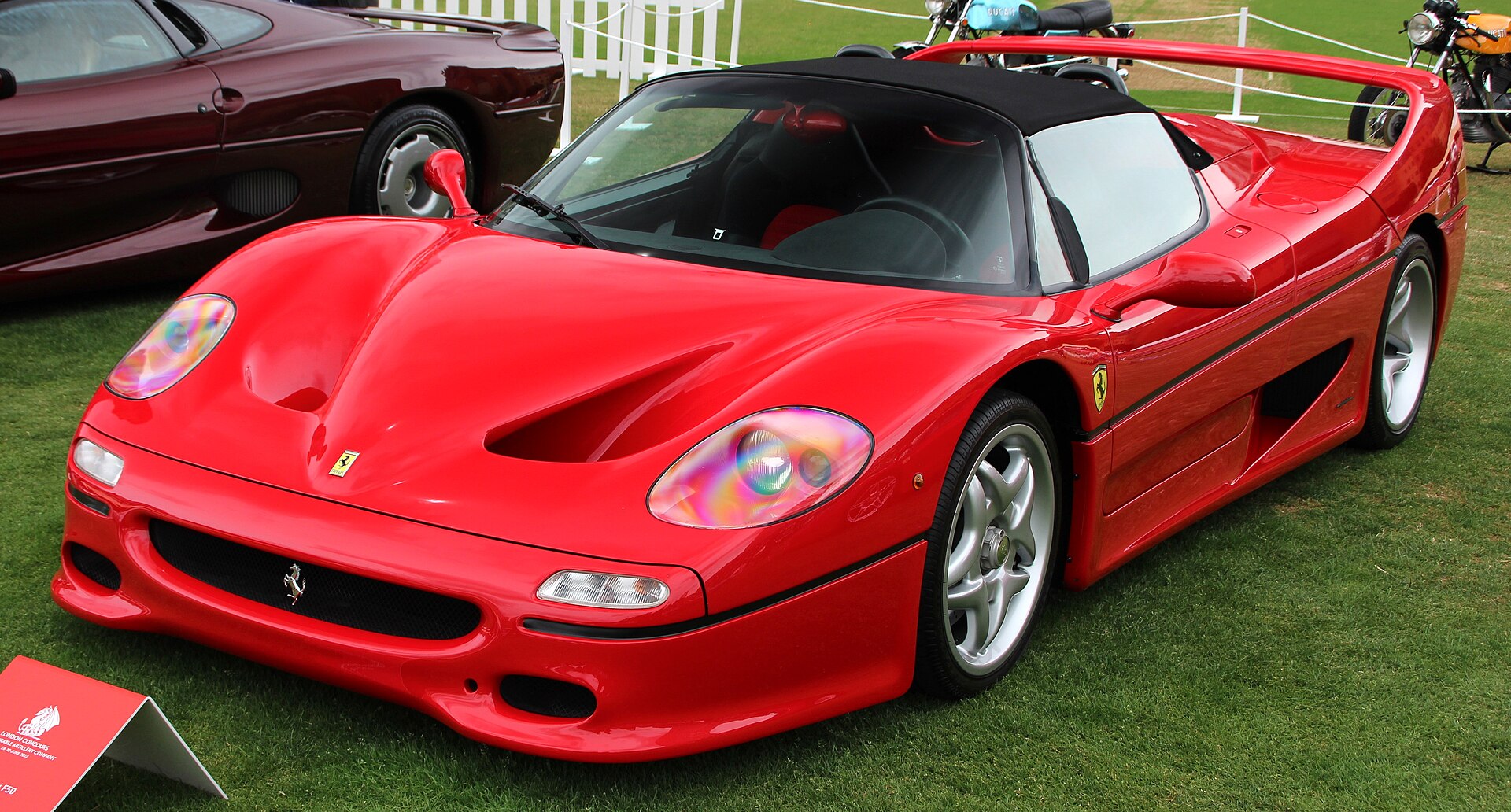
Ferrari unveiled the F50 at Geneva in 1995. Its 4.7-litre naturally aspirated V12 was developed from Ferrari Formula 1 engine architecture, while the carbon-fibre monocoque used the engine and transmission as structural elements.

A Ferrari F50 taken at London Concours 2022.MrWalkr — Wikimedia Commons — CC BY-SA 4.0
A Ferrari F50 taken at London Concours 2022. · MrWalkr — Wikimedia Commons — CC BY-SA 4.0

Automotive significance

The F50 pursued a very different philosophy from the turbocharged GTO and F40. Its V12 was extensively re-engineered for road use rather than being a Formula 1 engine installed unchanged, and its carbon-fibre chassis integrated the powertrain as a stressed part of the structure. Ferrari limited production to 349 cars. The project is best understood as a transfer of selected Formula 1 principles into a road-car package, not as a literal two-seat F1 car.

Heritage meets live inventory

See the Ferrari story in the cars that survive today.

Heritage explains why a car matters. Project Apex inventory shows what is actually available now. Only live, non-demo inventory is shown here.

No live Ferrari inventory is published on Project Apex right now.

The historical collection remains useful even when current stock is empty. Buyer Demand can monitor for the car you actually want.

Buyer Demand

Looking for a specific Ferrari model or generation?

Start with the marque, add the exact model and specification, and let Project Apex monitor real inventory.

We value your privacy
We use cookies to keep the platform running. Choose your preference below.