1984DesignVERIFIED

The Testarossa Turns Cooling Architecture into a Design Signature

October 1984 — Paris Motor Show

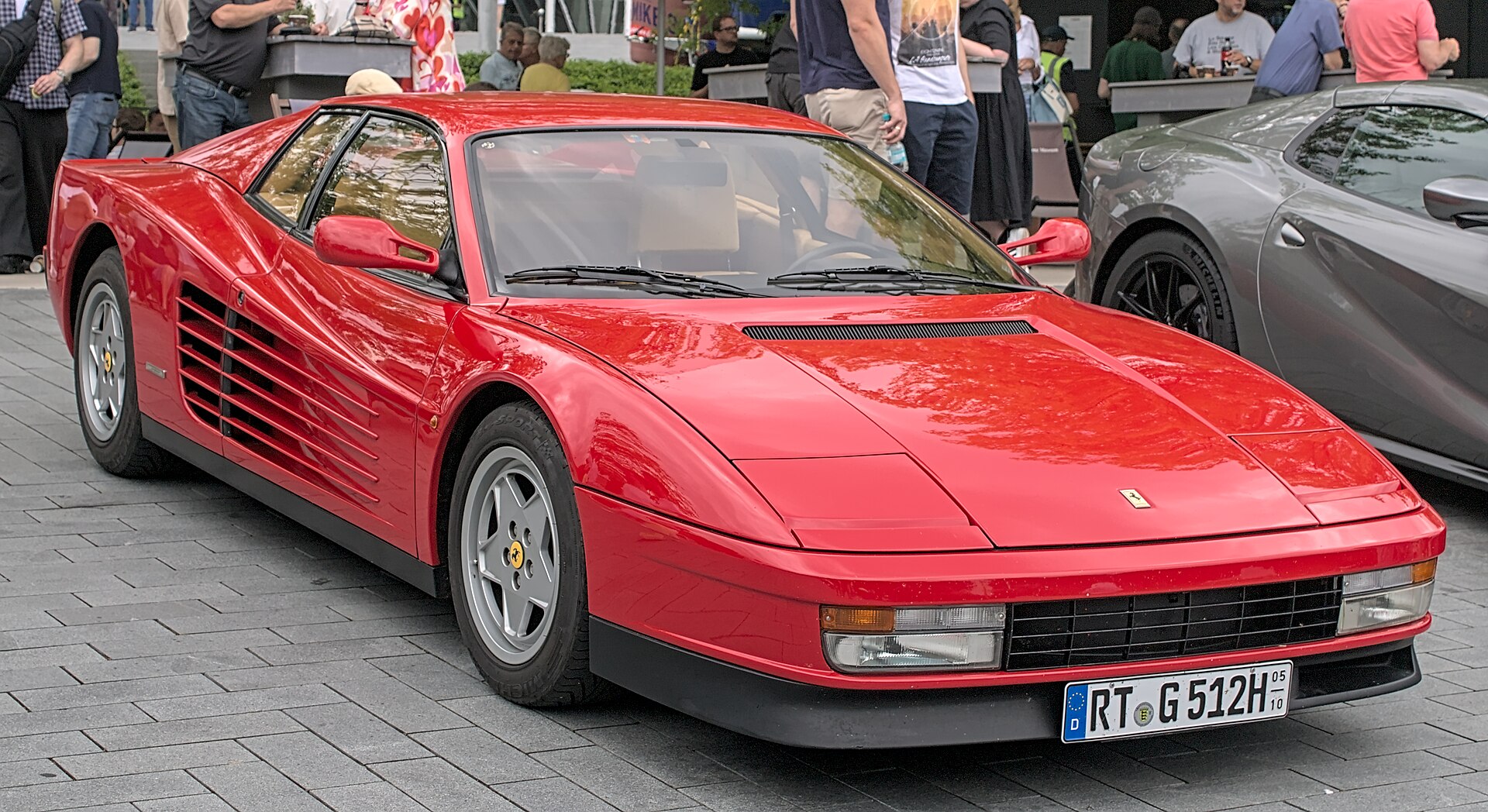
Ferrari introduced the Testarossa in Paris in 1984 as the successor to the 512 BBi. Its 4.9-litre flat-12 sat behind the cabin, while radiators moved toward the rear wheels and fed through large side intakes protected by the car’s defining horizontal strakes.

Ferrari Testarossa in StuttgartAlexander Migl — Wikimedia Commons — CC BY-SA 4.0
Ferrari Testarossa in Stuttgart · Alexander Migl — Wikimedia Commons — CC BY-SA 4.0

Automotive significance

The Testarossa is a strong example of engineering requirements shaping visual identity. Moving the radiators from the front of the car reduced long coolant runs but required much greater airflow through the body sides, which Pininfarina transformed into the wide rear track, sweeping intakes and protective strakes. The four-valve flat-12 produced 390 CV, combining grand-touring usability with a dramatically different interpretation of Ferrari’s twelve-cylinder mid-engine flagship.

Heritage meets live inventory

See the Ferrari story in the cars that survive today.

Heritage explains why a car matters. Project Apex inventory shows what is actually available now. Only live, non-demo inventory is shown here.

No live Ferrari inventory is published on Project Apex right now.

The historical collection remains useful even when current stock is empty. Buyer Demand can monitor for the car you actually want.

Buyer Demand

Looking for a specific Ferrari model or generation?

Start with the marque, add the exact model and specification, and let Project Apex monitor real inventory.

We value your privacy
We use cookies to keep the platform running. Choose your preference below.